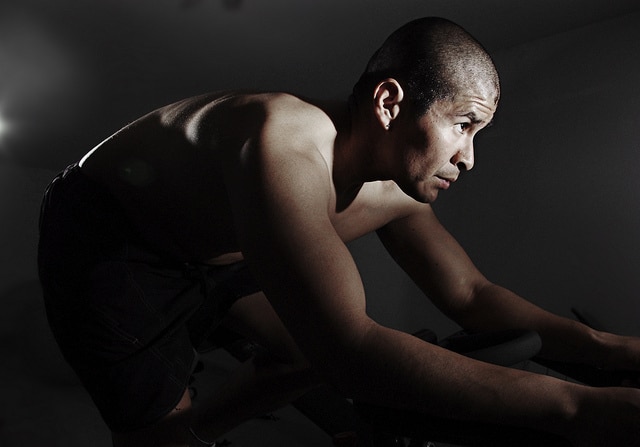
If you are new to the fitness industry or have been around the block a few times like I have, I’m sure you’ve heard the Japanese name “Tabata” being used just as often as the words “set”, “rep” or “interval.” This Japanese last name has become famous (almost legendary) and is commonly used as a verb in the fitness industry to describe a form of high intensity interval training (HIIT) – 20-seconds of work with 10-seconds rest performed for 8 rounds. This is a form of interval training with a work to rest ratio of 2:1 (the work interval is 2 x the length of the rest interval) and is quite short in duration (only 8 rounds worth for a total of 4-minutes…just 4-minutes!). Now, you can perform more rounds if you wish, but the authentic Tabata protocol only called for 6-8 rounds.
You see, WAY back in 1996 & 1997, Dr. Izumi Tabata and his research team published two academic articles in the Medicine & Science in Sports & Exercise titled Effects of moderate-intensity endurance and high-intensity intermittent training on anaerobic capacity and VO2max and Metabolic profile of high intensity intermittent exercises. Since Dr. Tabata was the lead author of these papers, the protocol is given his name (how cool would it have been if his last name was Kawamoto?!?). Anyways, trainers and trainees have taken this 20-10 HIIT protocol and have sub’d in their own exercises thinking they’re doing the Tabata protocol, where in fact, there is only one exercise that resembles the actual Tabata protocol: a mechanically braked cycle ergometer, which was the exercise chosen for these two studies. Let’s have a quick look at the studies just to get a better understanding of this now legendary protocol.
A Closer Look at the “Tabata” Studies
Subjects were young male students (physical education majors) volunteered for both of these studies – most were “physically active” and were members of varsity sports teams (table tennis, baseball, basketball, soccer and swimming).
All protocols were performed on a cycle ergometer (Monark bike) and were preceded with a 10-minute warmup at 50% VO2 max. Notice that common Tabata exercises such as Thrusters or running sprints were not used in the actual studies.
Without getting too deep in to the science, I’ll just bring up the important facts. During the 20-sec exercise period, the intensity (on the bike) was equal to 170% (yes, 170%) of the subject’s VO2 max. This is an all out effort where oxygen is not the only source of fuel. The body has to resort to other energy producing methods to sustain a crazy high intensity like this. Makes you think twice about alternating front planks for 20-sec and body weight squats for the other 20-sec – the intensity is just not high enough with these exercises.
Also, something else important to mention, is that these studies were not designed to assess fat loss. The high intensity intermittent exercise protocols used were utilized to examine the affects on aerobic and anaerobic metabolism, NOT fat loss. In the 1996 study, Tabata and his team found significant increases in subject’s maximum oxygen uptake and anaerobic capacity following 6-weeks of implementing the “Tabata” protocol. In their 1997 paper, they state that the 20-10 protocol, “appears to stress both the aerobic and anaerobic energy releasing systems maximally.” What does this mean for you? If you can suffer 170% of your VO2 max for 6-8 rounds of 20-10, you’ll crank up your ability to utilize oxygen and ability to work anaerobically. You’ll also get a huge boost in your EPOC (excess post-exercise oxygen consumption) meaning that your metabolism will be in overdrive for hours after your workout finishes. This could potentially lead to more calories burned and more fat lost.
So You Wanna Tabata?
What’s the take home message here? Well, if you want to “Tabata” something, the only way you’re going to get the authentic Tabata experience is by doing 6-8 rounds of 20-sec work (on a cycle ergometer) at 170% of your VO2 max at 90 rpm with 10-sec rest periods. According to Tabata’s results, this will positively impact your aerobic and anaerobic capacities and ramp up your EPOC for days (okay, maybe not days, but for quite a while after the workout).
“If you can suffer 170% of your VO2 max for 6-8 rounds of 20-10, you’ll crank up your ability to utilize oxygen and ability to work anaerobically. You’ll also get a huge boost in your EPOC (excess post-exercise oxygen consumption) meaning that your metabolism will be in overdrive for hours after your workout finishes.”
“Tabata-ing” lunges and pushups will not give you the authentic Tabata experience. All you’re doing is lunges for 20-sec alternating with pushups for 20-sec with 10-sec rest periods between exercises. Will you still increase your heart rate? Yes. Will you benefit from it? Probably. Will you burn calories? Yup. But just understand, it’s interval training, but the results will not even be close to what Tabata and his team found in his two studies.
Read GPP: Train for Life and Prepare for Anything
The Next Best Thing
So, you wanna Tabata stuff? Here’s the next best thing if you don’t want to die on the cycle ergometer – you’ll just die doing something else 🙂
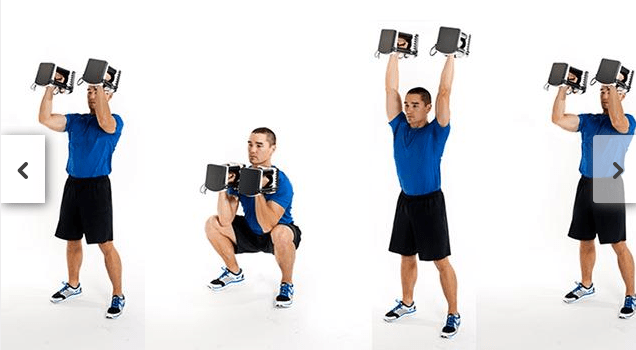
Choose multi-joint exercises that use as many muscle groups as possible. Great exercise choices include:
- Barbell, Dumbbell or Kettlebell Thrusters
- Treadmill Hill Sprints (death!!)
- Hard-syle Russian Kettlebell Swings
- Concept 2 Rowing
- Burpees
- Air Dyne Sprints (also death!!)
- Versa Climber Sprints (if you’re lucky enough to have access to one)
- Cross Country Skiing
Perform these exercises as fast as humanly possible. Seriously. Crank it (without hurting yourself) for the entire 20-sec. Do you best to recover in 10-sec (good luck) and hit it again. Repeat 6-8 times or until you collapse on the floor in a heap (which ever comes first).
Just remember, the goal is work at an intensity far greater than your VO2 max (so, no, low intensity exercises don’t count). This will also boost your EPOC and your calorie expenditure post workout (and hopefully shed some fat).
Perform 1-3x/week at the end or beginning of your workouts. Make sure to warmup thoroughly. You wouldn’t want to pull a hammy (or a lung).
-JK
References
Tabata, I., Irisawa, K., Kouzaki, M., Nishimura, K., Ogita, F., & Miyachi, M. (1997). Metabolic profile of high intensity intermittent exercises. Med Sci Sports Exerc. 29(3), 390-395.
Tabata, I., Nishimura, K., Kouzaki, M., Hirai, Y., Ogita, F., Miyachi, M., & Yamamoto, K. (1996). Effects of moderate-intensity endurance and high-intensity intermittent training on anaerobic capacity and VO2max. Med Sci Sports Exerc, 28(10), 1327-1330.