
High intensity circuits, high intensity interval training (HIT) and fasted cardio are all popular calorie burning methods.
But which strategy is best for you?
HIIT
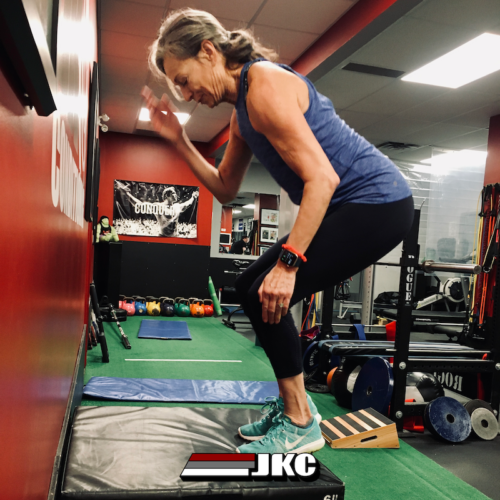
If you look at any fitness intensity chart from the 80’s and 90’s, you’ll see a zone referred to as the fat loss zone, which corresponds to roughly 60% of your max heart rate. Trainees were encouraged to workout in this zone because it was thought that fat would be primarily burned for fuel and therefore, reduce overall bodyfat. Then in the 2000s, along came HIIT and EPOC (excess post-exercise oxygen consumption). HIIT involves alternating bouts of high- and low-intensity exercise, designed to increase the total amount of high-intensity work performed during one training session (Schoenfeld & Dawes, 2009) and EPOC refers to the calorie expenditure required for recovery, post workout. A HIIT protocol performed with cardiovascular exercise can include hard sprints followed by easy jogging while a HIIT protocol using weights can include sets of a barbell complex performed with short rest periods between sets.
Research has shown that fat-burning zone-type cardio pales in comparison to HIIT when it comes to maximizing fat loss, as total caloric expenditure and fat breakdown are greater in an HIIT protocol (Schoenfeld & Dawes, 2009). Because of the high-intensity of HIIT, your homeostasis is taken further from its equilibrium compared to a similar session at a lower intensity. Therefore, in addition to burning more calories during the training session, your body will continue to expend calories post-workout (via the EPOC phenomenon) until your body reaches homeostatic equilibrium. This is commonly referred to as a metabolic disturbance; hence, HIIT also being referred to as metabolic disturbance training.
Fasted Cardio
Fasted cardio involves performing cardiovascular exercise, at a high- or low-intensity, on an empty stomach. The theory and belief behind this method of training is that the body will utilize fat as the main energy source, instead of carbohydrates, therefore resulting in greater fat loss (Schoenfeld, 2011).
According to Brad Schoenfeld, MS, CSCS (New York), a lecturer in exercise science and author of the Max Muscle Plan, this form of training “confers any fat loss benefits over and above non-fasted cardio” and that science does not support its efficacy (Schoenfeld, 2011). Tony Gentilcore, CSCS (Hudson, MA), strength coach and co-founder of Cressey Performance, says the “substrate you’re burning doesn’t really matter during [the actual training session.]”
If you have more fuel in your system, you should be able to train at a higher intensity and hypothetically burn more total calories overall, states Gentilcore. Eating a pre-workout meal is actually associated with a greater number of expended calories both during and after the workout and therefore enhances fat loss, compared to working out in a fasted state (Schoenfeld, 2011). There are several factors that influence fat mobilization and usage from subcutaneous adipose tissue says Schoenfeld. “It is shortsighted to look solely at how much fat is burned during an exercise session,” he states as “the human body is very dynamic and continually adjusts its use of fat for fuel.” Schoenfeld (2011) adds, “if you burn more carbohydrates during a workout, you inevitably burn more fat in the post-exercise period and vice versa.” Therefore, training fasted or fed does not directly influence your ability to burn fat for fuel.
According to Schoenfeld, the “bottom line is that in trained individuals, there does not seem to be any advantage to fasted cardio from a fat loss standpoint.” In addition, training with depleted glycogen levels (carbohydrate stores) has been shown in the research to increase protein breakdown, a process with detrimental effects for trainees concerned with building muscle and strength (Schoenfeld, 2011).
Fat Loss Folly: More Is Not Better
Gentilcore cautions trainees from taking their conditioning too far because “there comes a rate of diminishing returns [when thinking] more is better.” Protein synthesis and muscle building may be sacrificed if too much HIIT and cardiovascular exercise is added to a training program, says Gentilcore. Schoenfeld agrees stating that combining high training volumes with high intensity workouts of both weightlifting-type and aerobic-type exercise can result in overtraining and “impair protein accretion as well as [have] negative effects systemically on the body, that impairs results.” Stop worrying about burning fat on an hour-to-hour basis and instead consider it over the course of several days to see how it impacts your body composition (Hansen et al., 2005).
Putting it Into Action
Adding muscle to your frame takes a dedicated bodybuilding program complimented with a healthy nutritional plan with a slight calorie surplus. Depending on this surplus, additional calories may be stored as fat, taking away from the appearance of shredded striated muscles. When adding fat loss workouts to your program, focus on these tips:
If your goal is purely hypertrophy, focus on your bodybuilding program and add in low-intensity cardio as a separate training session if you think it’s necessary. Depending on your recovery ability, you can add 2-4 low-intensity aerobic sessions per week. An example session may involve an incline treadmill walk for 30-60-minutes as 60-65% of your max heart rate. Going for a walk around your neighborhood is also a great alternative. This form of training will not take too much out of you, unlike HIIT; therefore, saving energy for your muscle building workouts.
If your goal is purely fat loss, incorporate these training sessions in the fed-state:
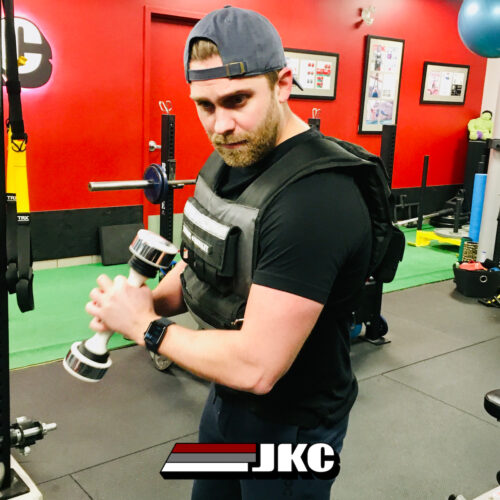
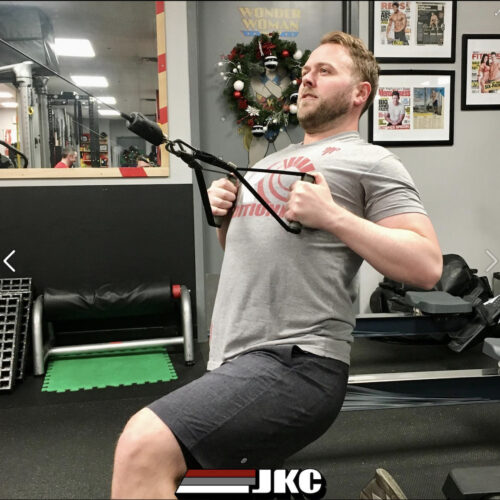
2-3 sessions/week of HIIT with weights (e.g. barbell complexes, resistance training circuits, sled pushes, kettlebell swings, etc.)
1-2 sessions/week of HIIT performing sprints (e.g. hill, track, spin bike, etc.)
1-2 sessions/week of low-intensity cardio
Just as with the hypertrophy protocol, pay attention to your body and recovery ability before adding more training sessions to your program.
References
Hansen, K., Shriver, T., & Schoenfeld, D. (2005). The effects of exercise on the storage and oxidation of dietary fat. Sports Med, 35, 363-373.
Schoenfeld, B. (2011). Does cardio after an overnight fast maximize fat loss? J of Strength and Cond, 33(1), 23-25.
Schoenfeld, B., & Dawes, J. (2009). High intensity interval training: Applications for general fitness training. J of Strength and Cond, 31(6), 44-46.
This article first appeared on MuscleMag.com
photo credit: eccampbell via photopin cc