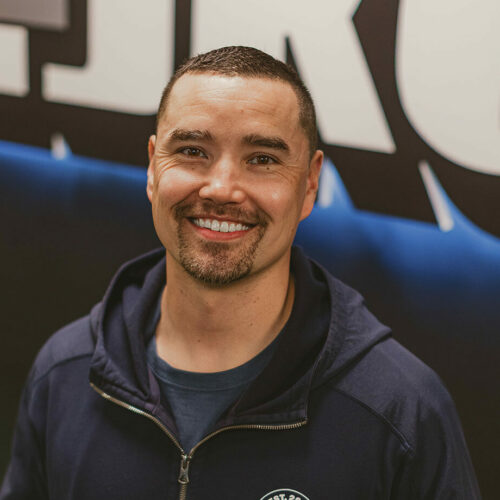
This is a guest post from Nick Roberts, a 6-time Canadian National Champion in Olympic weightlifting.
In addition to squatting and other unilateral quad-dominant exercises, any well rounded strength training program must include forms of lower body pulling to result in adequate structural balance and optimal muscle development.
Simply loading a bar with heavy weight and ripping it off the ground may not suffice for a trainee’s goals, as additional variables must be taken into account. Exercise tempo and loads lifted should both be varied to hit different regions of the strength curve while developing various qualities and portions of the pull.
When training for either Olympic Weightlifting, Crossfit, or your sport, Olympic pulls can be a great asset in a trainee’s program. Olympic pulls include low or high clean/snatch pulls without receiving the bar in the front racked or overhead positions.
I often get the question “how heavy, how many reps, where do I program them in, etc.?” My answer often depends, as there are several things to consider:
1) A trainee MUST have a few solid years of consistent, quality training and firmly grasp how to hinge at the hip, and must have reasonably respectable lifting numbers before adding in Olympic pulls. If unsure, stick with a speed deadlift and work on improving relative strength.
2) How much experience does the trainee have with Olympic lifting? What kind of habits do they have? When I teach the basics, even those with some experience often have critical errors in technique. If re-learning the lifts or new to Olympic lifting, I keep pulls to light “technique” weights, sets of 3-5 reps, from various positions. More often than not, I get my clients to do Olympic pulls from a hang (below knee position) for ease of learning.
3) Does the athlete “need” Olympic pulls? Sure they’re fantastic at building explosive power, posterior chain strength, and are highly enjoyable to learn, but sometimes the athlete simply isn’t ready or really need them. They would be better off doing more deadlifts from various positions, tempos, and intensities.
Now, for more experienced trainees, and Olympic lifting specific athletes, pulls are very effective. I vary the intensity from as low as 70% of 1RM of the technical lift in question (say the Snatch) to as high as 120%. They all have advantages and disadvantages and are all valuable. The key is to know when and where to program them in. I’ll give a few examples:
Sure Olympic pulls are fantastic at building explosive power, posterior chain strength, and are highly enjoyable to learn, but sometimes the athlete simply isn’t ready or do not really need them. They would be better off doing more deadlifts from various positions with different tempos and loads.
Nick Roberts
A) If pulling strength and posterior strength is the issue, and far from competition or peaking, higher percentages of pulls are predominant. These take more energy to perform than some people think, and as always, our ability to recover is limited so pushing hard on the technical work at the same time can lead to stagnation, injury, and bad habits.
B) If speed is the issue, pulls in the 70-90% zone are favored, and more sets with less reps per set. Super setting with plyometrics also gives a great training effect. Heavy pulls are minimized or eliminated for the time being. Deadlifts with bands/chains will also help this, but don’t go heavy!
C) If strength off the floor is weak, a combination of movements that build relative strength and speed and technique lifts with 60-80% should improve that deficit. Also, pulls/deadlifts from a raised podium with moderate loads are very effective.
Because of the explosive nature of Olympic pulls and deadlifts, naturally you want to program them first/early in the workout for a trainee that’s not competing in Olympic Weightlifting. However, it’s much further down the priority list for Olympic lifters, so it usually comes last or near the end of our workout. We can to spend the majority of our time doing the technical work, squats, and pulls are the finishing touches. I do however recommend specializing in pulls/posterior chain if it’s lagging
significantly behind squatting/anterior work.
The set up for Olympic clean/snatch pulls:
- bodyweight over the arches, not on the heels
- stay over the bar as long as possible
- get the double knee bend rather than just going for lockout (*this is the main difference between an Olympic pull and a speed deadlift; speed deads are also primarily performed with more weight on the heels)
- for athletes, set up with a mid to forefoot position
Nick Roberts is a 6-time National Champion in Olympic Weightlifting and currently holds two Canadian records at 94kg (195kg Clean and Jerk, 346kg Total). He is training to compete for Canada at the 2014 Commonwealth Games, and 2015 Pan American Games. He can be reached at nr.massage@hotmail.com for training, programming, and ART treatments.
*****
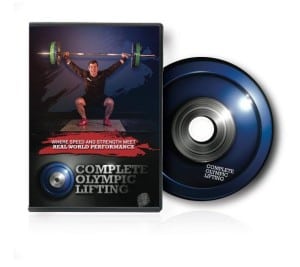 Enjoyed this post? Then you will likely enjoy Wil Flemming’s Complete Olympic Lifting.
Coaches and trainees can both benefit from this great resource. Wil discusses both the clean and snatch lifts and their variations. He also has several sample O-lifting programs for all abilities. I strongly encourage all trainees learn how to O-lift from actual coaching sessions (one-on-one or in a small group with lots of hands on) but this manual and DVD will act as a great resource for you years down the road.
Click HERE if you’re inserted in finding out more about Complete Olympic Lifting.
Learning the clean for the first time? Read this.