 My good friend and past training partner Matt Johnston decided to take some time out of his busy schedule to write a guest post for StrongerRunner.com on mental preparation for racing.
Matt’s a Performance Enhancement Consultant at Centered Lifestyle (www.centeredlifestyle.com) and he also represented Canada at the international level in Athletics.
Take it away Matt…
The following is a combination of my experience as a professional athlete and the research I have reviewed in the realm of athletic performance enhancement.
In order for these mental preparation tips to be effective, you have to be physically prepared for the demands of the competition for which you have set out to tackle. Battling through injury or setting your goals too high, makes mental preparation largely ineffective because the prolonged benefits of proper mental preparation involve being honest with yourself and knowing where you stand in your training cycles. Think of your consistent injury-free training as the basic ingredients for baking a cake and once it cools down, mental preparation is the icing that is applied to complete it. What follows is a very brief description of some important mental preparation tips that each and in themselves could be a series of future, more elaborate posts.
Top Five Tips for Pre-Race Mental Preparation
1. Feeling alert and slightly nervous is an indication you are ready. Acknowledge that butter flies and slight anxiety is an indication that you are in the right pre-race mindset. There is an optimal level of arousal for each person that corresponds to ideal race performance. Too laid back is an indication that you may not be focused on the demands of the competition at hand. Conversely, being overly anxious is likely an indication that you have set your goals too high. If you feel overly anxious before a race, you may benefit from relaxation techniques that involve resetting your breathing pattern, thereby facilitating a calmer mindset and correspondingly, lower muscle tension that is associated with excessive anxiety.
2. Create a mental map of the course and pair it with positive, process-oriented feelings. Run the course several days prior to the race (if not possible, look at the race progression chart online) and spend time visualizing each kilometer, pairing various parts of the course with how you want to be feeling. Keep this visualization very vivid, but use simple key words like “breathe through the pain” or “keep loose” at difficult parts of the race. Because we tend to be focused during the race, using complicated mantras usually do not work, because they are easy to forget in the moment.
3. Strive for personal excellence rather than perfection. This applies to any runner from novice to world record holder. We do not have much control over external results because results largely depend on the performance of our competitors and how we perform on the given day. Personal excellence however, is largely intrinsic, meaning that our goals and achievements come from within us and we are not distracted by the performance of others around us. When we focus on extrinsic goals, we are prone to overlooking the unpredictable and often uncontrollable challenges that get us to the finish line.
4. Focus on process rather than outcome goals. We live in a society that is obsessed with outcome achievements based around results. While your job may require you to live in this mindset, the most successful athletes train within themselves. They do not focus on what other athletes are doing unless it motivates them to become better. Your goals should be on things like improving your race time in comparison to the previous year, or tackling a tough kilometer faster than years past.
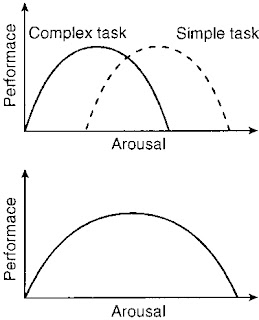
5. You pick the races, they do not pick you. You are most likely to experience flow when your skills match the level of challenge. Often, people think more is better, and quickly jump up to a distance that they are not prepared for on a physical and mental/emotional level. Aside from the physical challenges of staying injury-free, our mindset is going to be flooded with insecurity and self-doubt over a prolonged period of time in the race. Some people think this is part of the challenge and celebrate how hard it was just to finish, but in my experience this is a recipe for burn-out, injury and loss of interest in consistent training. To have an enjoyable and challenging experience, we should be honest with ourselves and pick races that reflect where we are at in terms of our training and experience, rather than prestige or bragging rights.
In your mental preparation, it may be helpful to remember that you cannot be both anxious and relaxed at the same time. For smaller races that are hard to get mentally up for, visualize a more important race during the warm up to increase your arousal levels. Conversely, if you are entered in a race that is flooding you with self-doubt and worry, find ways to minimize these negative feelings by breathing through the anxiety and telling yourself positive statements based on previous performances. In doing this, you will soon realize that you can manipulate your level of pre-race arousal thereby facilitating better results. Good luck and I hope all of you have an injury-free winter.
*****
Matthew Johnston is a Performance Enhancement Consultant at Centered Lifestyle Services (www.centeredlifestyle.com). In addition to his training as a Clinical Counselor, he also represented Canada at several international competitions in distance running.
Matt’s personal bests:
1500m: 3:47
Mile: 4:04
3000m: 7:55
5000m: 13: 47
10,000m (road): 29:52
Thanks for reading and RUN STRONG (physically and mentally),
-JK